- About
- Affiliates
- Join
- Publications
- Estuaries and Coasts
- CERF's Up! Quarterly Bulletin
- Coastal & Estuarine Science News (CESN)
- CERF-Lit
- Advertising
- Programs & Events
- Inclusive Culture
- Communities
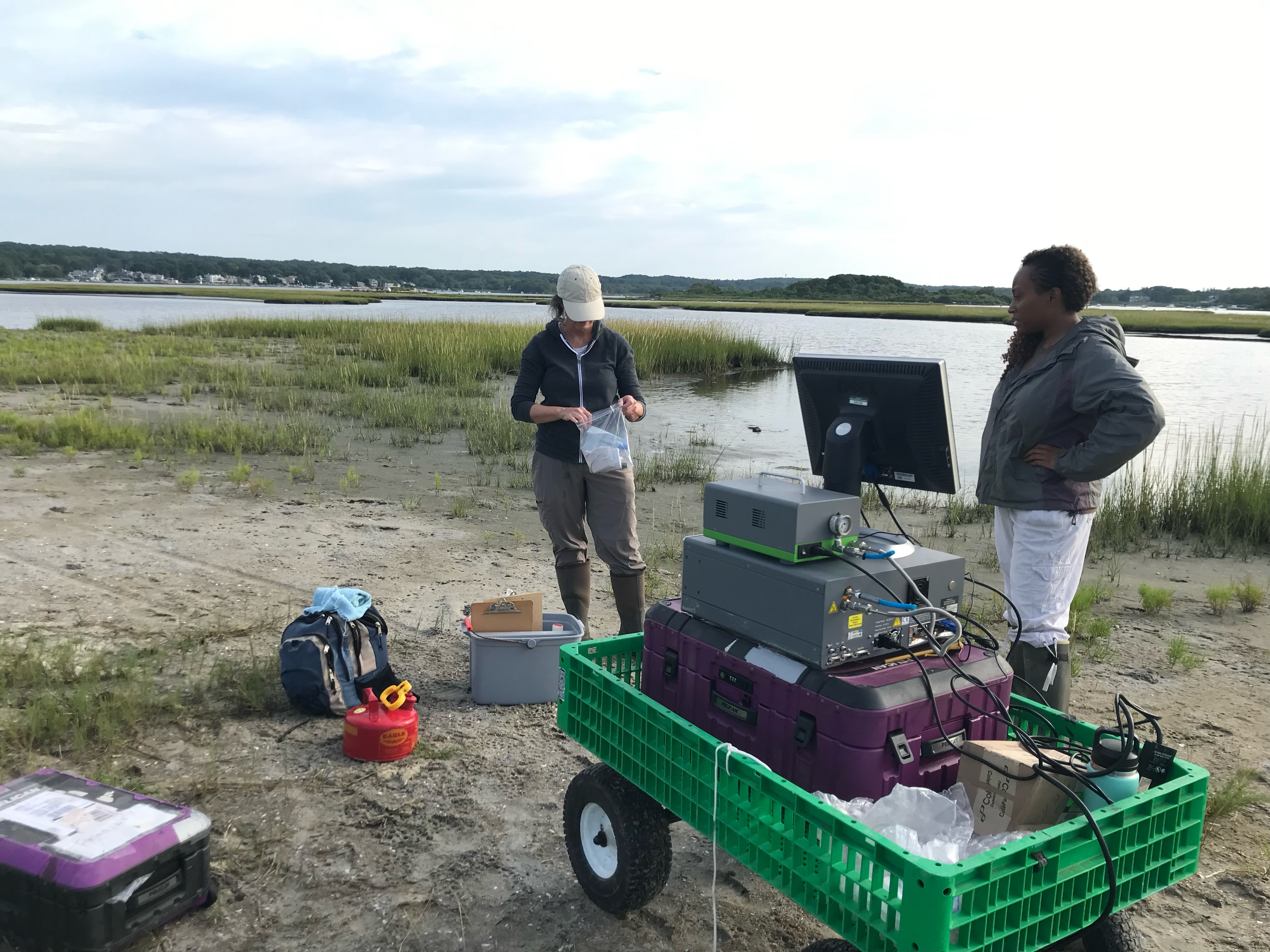
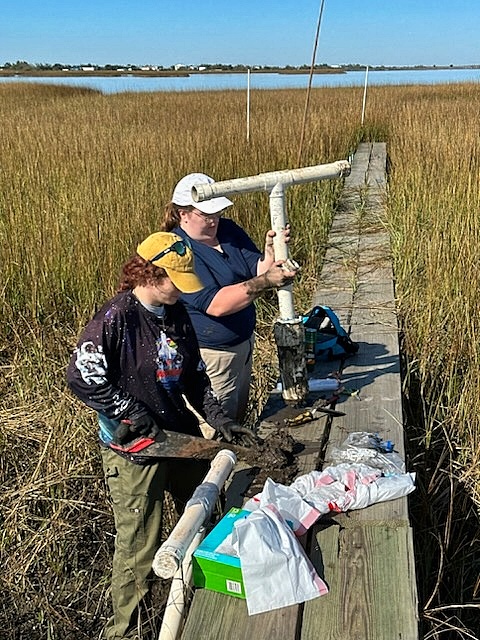
Coastal & Estuarine Science News (CESN)The mission of Coastal & Estuarine Science News (CESN) is to highlight the latest research in the journal Estuaries and Coasts that is relevant to environmental managers. It is a free electronic newsletter delivered to subscribers bi-monthly. Sign up today! 2026 Issue 3Table of ContentsHigh CO2 Can Boost Seagrass Seedling Establishment High CO2 Can Boost Seagrass Seedling Establishment Experimental study suggests new method for eelgrass restoration Seagrass meadows in New York state have seen a 90% reduction in coverage over the past century. Some climate-related changes, such as ocean acidification, have been shown to enhance seagrass, and recent studies suggest that pre-conditioning reproductive shoots to high CO2–low pH conditions could lead to more robust seeds. Researchers investigated how increased carbon availability during reproductive shoot development influenced seed quality, germination, and seedling establishment of Zostera marina eelgrass in both lab and field settings. First, reproductive shoots were collected from an ocean-flushed meadow and grown under current pH (7.9 or “ambient”) and reduced pH (6.9 or “carbon enriched”) conditions until seeds were fully developed. They measured seed viability, carbon content, and phenolics. Next, they examined seed germination at two temperatures (20 and 22oC) and pH (7.9 and 7.3) treatments in the lab. Finally, a field experiment was conducted by planting ambient and carbon-enriched seeds at two contrasting sites in Shinnecock Bay, New York: one that experienced suboptimal growing conditions and another with a large contiguous meadow. Seeds generated under high C02–low pH were more viable than those generated under ambient conditions, and they also survived better in low pH and high temperature conditions. Neither organic content nor phenolic content differed between treatments. Germination was driven by temperature: All seeds germinated significantly faster in cooler temperatures regardless of reproductive shoot exposure or pH, suggesting that temperature remains an important factor in choosing restoration sites. This work demonstrates that reproductive shoots can respond to seawater conditions, resulting in positive parental carryover effects. The authors estimate that survival time in seedbanks could be doubled by growing reproductive shoots in seawater with elevated CO2. In the field experiment, seeds developed in high CO2 produced significantly more seedlings irrespective of site characteristics. Taken together, this work greatly expands the tools available for meadow restoration. Source: Lowell, A.V. et al. 2026. Increasing Carbon Availability During Seed Development Could Facilitate Eelgrass Restoration by Bolstering Seed Banks and Increasing Seedling Establishment. Estuaries and Coasts. DOI: 10.1007/s12237-026-01670-0 Thick-Layer Sediment Placement: When Will Ecosystem Functions Return? Full recovery may take a decade or more As sea-level rise threatens native coastal habitats, sediment enhancement for salt marsh restoration has become an increasingly common strategy for improving resilience. However, it remains unclear when restored marshes will recover all their expected ecosystem functions, especially with varying results across different sediment addition depths. To better estimate salt marsh recovery, researchers conducted field studies at two thick-layer sediment enhancement sites in Charlestown, Rhode Island: Quonochontaug (average 57 cm sediment addition, 2–4 growing seasons post-placement) and Ninigret (average 37 cm sediment addition, 5–6 growing seasons post-placement). The restored salt marshes were evaluated for vegetation cover, soil characteristics, elevation change, and daytime greenhouse gas fluxes from the sediment in comparison to control sites. Vegetation recovery was the quickest, most noticeable improvement post-sediment addition, although results varied by site: Quonochontaug was still steadily recovering after four growing seasons, whereas Ninigret had greater total vegetation cover than the control site after six growing seasons. Restored sites demonstrated net greenhouse gas uptake, but at a lower rate than the controls, suggesting that these sites are still recovering. Soil properties at the control sites had more moisture, organic matter, root density, carbon density, and carbonate; only bulk density was higher at the restored sites. Restored sites initially lost elevation following sediment placement, likely due to the absence of established vegetation to stabilize the newly deposited sediment. As plants recolonize over time, elevation is expected to increase. Improvements in ecosystem function and services are expected as sediment enhancement sites continue to recover, though it may take a decade or more to assess whether restoration goals are fully met. Initially, there will be tradeoffs with thick-layer sediment placement, with the potential for greater benefits over the long term. Source: Perry, D.C. et al. 2026. Assessing Recovery: Examination of Greenhouse Gas Fluxes, Soil Characteristics, and Vegetation in Sediment Enhanced Marshes. Estuaries and Coasts. DOI: 10.1007/s12237-026-01676-8 Image: Preparing for greenhouse gas flux measurements using the Picarro gas analyzer at Quonochontaug salt marsh / Nia Bartolucci Utilizing Traditional Ecological Knowledge in Louisiana Do sea-level rise predictions align with TEK? Predictions about vulnerability to sea-level rise are typically based on models that lack place-based context. This information is better captured by traditional ecological knowledge (TEK), which is acquired through lived experience and passed through generations via oral history. The Pointe-au-Chien Indian Tribe (PACIT) depend on Louisiana’s Terrebonne Bay for their subsistence and livelihoods. Using these Spartina alterniflora-dominated marshes as a case study, researchers wanted to demonstrate the value of examining land loss and other SLR effects through diverse perspectives. The team developed a biophysical model based on field measurements, wetland maps, and elevation data that predicted wetland loss under different SLR scenarios. The model predictions were compared to TEK-based maps co-produced with PACIT members prior to this study that identified areas of community concern and cultural priority. The comparison evaluated features in terms of both their vulnerability and sustainability (based on the risk of wetland loss and their potential adaptability to SLR, respectively). The low-accelerating SLR model predicted minimal wetland loss by 2100 in areas that were considered medium to low (or no) priority in terms of their TEK assessment. However, under the high-accelerating SLR scenario, the model predicted a loss of 93% of wetlands by 2075—encompassing a large section of areas identified as high to medium priority for preservation based on TEK. The comparison found areas of consistencies as well as discrepancies between the model predictions and TEK assessment—highlighting where two sources of knowledge provide complementary sets of insights. For example, the TEK assessment considered risk factors such as proximity to spoil banks and highly fragmented areas that were not included in the model. From this work, the team developed a GIS tool that compares model predictions with TEK spatial assessments to identify areas that should be protected first. This approach for Indigenous-led resilience planning can be adapted elsewhere with TEK data specific to other tribes. Source: San Antonio, K.M. et al. 2026. Assessing Resilience of a Coastal Wetland to Relative Sea-level Rise for a Native American Tribe in Louisiana – Comparing Biophysical Prediction and Traditional Ecological Knowledge. Estuaries and Coasts. DOI: 10.1007/s12237-026-01679-5 Image: Belowground biomass extraction with a PVC soil core tool / Matt Bethel Wetlands Can Be Carbon Sources Don’t forget about carbon exchange at the air-water interface Seagrass meadows and other vegetated coastal ecosystems can store substantial amounts of organic carbon in their sediments, acting as so-called blue carbon sinks. Although they occupy about 0.2% of the ocean floor, seagrass beds are estimated to provide around 10% of global carbon storage. However, recent studies suggest that areas with seagrass beds can sometimes be net sources of CO2 to the atmosphere, particularly in systems impacted by wastewater and other nutrients. Additionally, other greenhouse gases can also affect the overall carbon balance in a system. Researchers wanted to compare carbon exchange at the air-water interface with estimates of carbon storage in the sediment. They measured CO2, methane, and nitrous oxide fluxes in areas above eelgrass beds, bare sediment, and oyster farms in Potter Pond and Pt. Judith Pond, two eutrophic coastal lagoons in Rhode Island. Cores were collected to estimate percent organic carbon in the sediment and, along with published rates of sediment accumulation, to estimate carbon storage over a 100-year time horizon. Measurements were converted to CO2 equivalent (CO2e) to account for all three greenhouse gases. The loss of carbon at the air-water interface in these vegetated lagoons offsets some or all of the carbon accumulated in the sediment. Gas exchange with the atmosphere was variable, though net emission of CO2 and methane was observed from seagrass beds with fluxes higher than those from areas with oyster aquaculture and in bare habitats. Of note, at the bare habitat at Potter Pond, the monthly average CO2e over a 100-year horizon was a net sink. Although CO2 flux was dominant, methane was also a source of emissions, whereas nitrous oxide fluxes were small. The team speculate that high CO2 and methane emissions may be due to the abundance of rapidly decomposing macroalgae in these eutrophic lagoons. This work demonstrates how simply classifying seagrass beds as carbon sinks may be inaccurate, and it’s critical to prevent these habitats from becoming carbon sources. Source: Wigand, C. et al. 2026. Carbon Dioxide and Methane Emissions from Eutrophic, Vegetated Coastal Lagoons Potentially Offset Carbon Accumulation in Eelgrass Sediments. Estuaries and Coasts. DOI: 10.1007/s12237-026-01674-w |