- About
- Affiliates
- Join
- Publications
- Estuaries and Coasts
- CERF's Up! Quarterly Bulletin
- Coastal & Estuarine Science News (CESN)
- CERF-Lit
- Advertising
- Programs & Events
- Inclusive Culture
- Communities
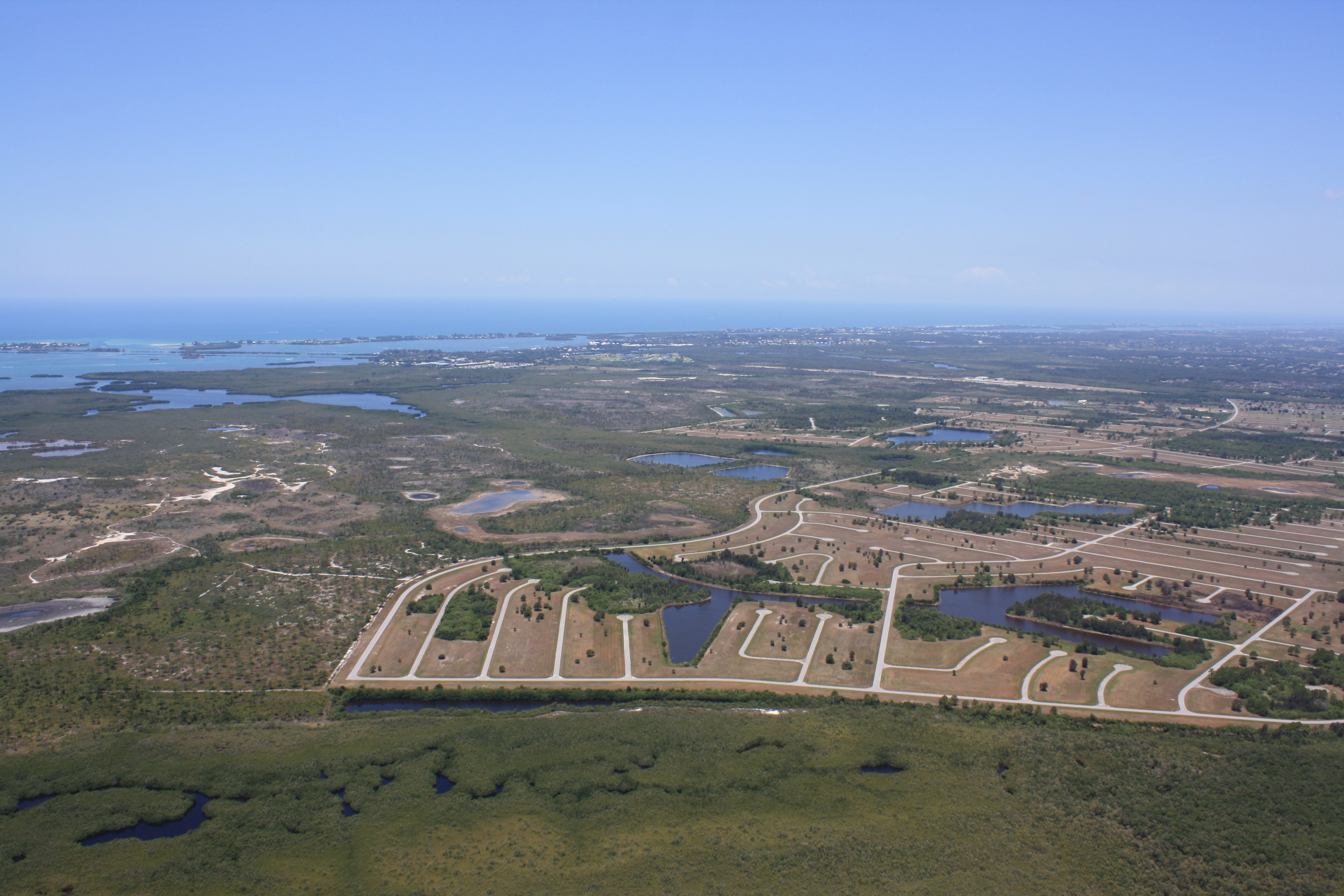
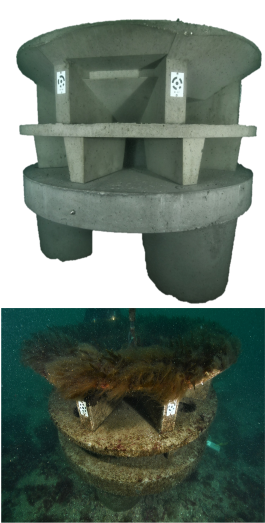
Coastal & Estuarine Science News (CESN)The mission of Coastal & Estuarine Science News (CESN) is to highlight the latest research in the journal Estuaries and Coasts that is relevant to environmental managers. It is a free electronic newsletter delivered to subscribers bi-monthly. Sign up today! 2026 Issue 4Table of ContentsWorking Together for Juvenile Sport Fish Habitat Working Together for Juvenile Sport Fish Habitat Engaging local government in the co-production process, a Florida case study Protecting the habitats of key fish species can have many benefits beyond the fish themselves, such as improving water quality, increasing recreational opportunities, and boosting local economies. Because knowledge of life histories as well as zoning and enforcement are all critical to their protection, an active partnership is required between a variety of stakeholders, including local government. Researchers working in southwest Florida provide a case study of the knowledge co-production process for conserving fish habitat. The Charlotte Harbor estuary provides nursery habitats for two economically important sport fish: common snook (Centropomus undecimalis) and tarpon (Megalops atlanticus). The area is also experiencing an increase in land development activities that threaten nearby tidal creeks and coastal wetland ponds. There are currently no explicit habitat protections. To help bridge the science and policy gap, NOAA sponsored four half-day public workshops that provided basic biological and habitat information, consensus building on potential management decisions, and collaborative planning on research approaches. Stakeholders included scientists, fisheries professionals, and representatives from NGOs, local and state governments, and enforcement agencies. In addition to discussing runoff issues and zoning policy decisions, the team also worked on land use and habitat mapping and hydrological and other predictive modeling. As a result of this effort, there have been published research results expanding biological and ecological knowledge of the target species to further guide conservation efforts, and a habitat vulnerability analysis is in the works. Regional land trusts and county government have begun incorporating fish habitat location data and identified nine parcels of land as high priority for conservation. County government has used the initial results to inform monitoring locations and conduct flood modeling for properties near fish habitat. All of this will contribute to the next revision of the county’s comprehensive plan, and this example has already initiated similar efforts in nearby estuaries. Source: Anderson, C.R. et al. 2026. Knowledge Co-production to Inform Fish Habitat Conservation: A Case Study Highlighting Engagement With Local Government. Estuaries and Coasts. DOI: 10.1007/s12237-026-01712-7 Image: Coastal development abutting sport fish nursery habitat / Corey Anderson Scale Matters When Predicting Saltmarsh Sparrow Occurrence Fine-scale measurements improve management models for sensitive species As a tidal marsh specialist, the saltmarsh sparrow (Ammospiza caudacuta) is particularly vulnerable to sea–level rise and habitat loss. These birds evolved to nest in high marsh vegetation, and successful nesting requires at least 23 consecutive flood-free days. Their extinction is predicted by mid-century due to expected declines in the availability of both high marsh habitat and flood-free days. The saltmarsh sparrow is a species of conservation priority, and managers need to be able to predict which sites are important to inform restoration approaches. Researchers wanted to evaluate a marsh-scale management model (where a single marsh unit is defined as a continuous section of salt marsh) that was developed to identify priority habitat for the species. The team modeled the probability of occupancy using saltmarsh sparrow count data surveyed at 86 points across New Hampshire during the 2022 breeding season. After identifying local metrics, they compared those fine-scale features with the coarser marsh-scale variables to determine which best related to saltmarsh sparrow occupancy. The study found that two local features were the strongest predictors of where saltmarsh sparrows are likely to occur: proximity to high marsh cover and distance to the nearest upland edge. These features are linked to reduced flood and predation risk, respectively, and the researchers were able to come up with specific occupancy predictions from these observations. Although percentage of high marsh was the best predictor of occupancy at the whole-marsh scale, it did substantially poorer than the more detailed, localized model. These findings highlight the importance of considering local, fine-scale data to help refine habitat prioritization tools—especially for sensitive species such as saltmarsh sparrows, which have narrow nesting habitat requirements. Source: McCulloch, G. et al. 2026. The Importance of Local Scale Factors in Restoration Planning: A Case Study With an Indicator Species for Salt Marsh Ecosystems. Estuaries and Coasts. DOI: 10.1007/s12237-026-01699-1 Image: Saltmarsh sparrow / Grace McCulloch Can Recreational Divers Help Monitor Artificial Reefs? Quantifying the efficacy of participatory science Shallow rocky reefs and other hard-bottom communities are time-consuming and costly to monitor because scientists with SCUBA diving skills must collect data in situ. Increasingly, participatory science efforts conducted by recreational (non-professional scientist) divers following simplified protocols are being utilized for collecting data. However, the accuracy and effectiveness of their efforts have not been thoroughly evaluated, and concerns about the quality and relevance of participatory science data limit their broader use. To investigate, researchers turned to data collected while monitoring the colonization of artificial reefs immersed at three hard-bottom sites in France’s Saint-Malo Bay. Eighteen recreational divers attended a handful of training sessions, and then, along with three professional scientist divers, they recorded the presence or absence of 48 easily identifiable taxa during eight-minute dives. These surveys were also compared with image-based monitoring using surface-from-motion photogrammetry. Overall, the study found that trained, recreational divers can produce data of comparable quality to that of professional scientists. There were high, consistent levels of agreement between the two different groups of divers. The community composition results obtained by the divers were similar between the diving groups, but there was higher agreement for mobile epifaunal and fish taxa and lower agreement for macroalgae and fixed taxa. Furthermore, there was strong agreement between the results of the non-scientist diver surveys and the results of the more accurate surveys conducted using photogrammetry, demonstrating the reliability of simplified protocols. The greatest differences in surveys were where diversity was greatest. These findings underscore the usefulness of diving-based participatory science surveys in detecting spatio-temporal changes in marine community composition. The authors recommend initial training and structured, straightforward approaches, such as presence or absence surveys and the use of restricted checklists of selected taxa. Participatory science programs could really benefit marine science and management by extending monitoring to larger spatial and temporal scales. Source: Serranito, B. et al. 2026. Assessing the Robustness of Participatory Science for Tracking Spatio-Temporal Changes in Marine Benthic Biocenoses on Artificial Reefs. Estuaries and Coasts. DOI: 10.1007/s12237-026-01698-2 Image: MARINEFF artificial reefs before and one year after immersion / Valentin Danet The Nutrient-Removal Power of Aquaculture The monetary value of nitrogen removal could be hundreds of millions a year When mussels, oysters, and clams filter feed, the nutrients they incorporate into their tissue and shell are removed from the system once they’re harvested. This bivalve-mediated nutrient bioextraction offers a promising nature-based solution to help with eutrophication. However, the translation into policy has been slow. Researchers wanted to assess bivalve aquaculture as a water-quality management tool, focusing on the main commercial species accounting for over 90% of UK bivalve production: blue mussels (Mytilus edulis), Pacific oysters (Magallana gigas), native oysters (Ostrea edulis), and Manila clams (Ruditapes philippinarum). To estimate nutrient removal, the team used data on tissue and shell nitrogen and carbon content, together with model estimates of farm-scale nutrient removal; these were then scaled up to national production levels. In 2019, bivalve aquaculture in the UK removed an estimated 127 to 286 metric tons of nitrogen. The same harvested bivalves fixed about 1,763 metric tons of carbon in their tissue and shell. Mussels accounted for the vast majority of nitrogen removal (up to 265 metric tons) due to their much larger production volume and high nitrogen removal efficiency per unit of production. Scotland and England contributed the most to total nutrient removal since they had the highest production, whereas Wales and Northern Ireland showed the highest removal relative to their own nitrogen loads. The team also compared the cost of bivalve nitrogen removal services to that of alternative mitigation methods such as wastewater treatment upgrades or catchment management. The estimated monetary value of nitrogen removal provided by UK bivalve aquaculture ranged widely, from about £33,000 to over £314 million (about $44,000 to over $418 million) per year, depending on the type of alternative mitigation method used. Overall, bivalve bioextraction is an encouraging solution for helping manage eutrophication in UK coastal waters while providing economic and ecosystem service benefits (as well as a sustainable protein source), but it should be used as a complement to, not a replacement for, other nutrient-management measures. Source: Woźniacka, K. et al. 2026. Bivalves at Work: Quantifying Nutrient Removal Services in UK Coastal Waters. Estuaries and Coasts. DOI: 10.1007/s12237-026-01689-3 |